
It’s a boy! What’s the name going to be? Dylan, Tom? Timothy, Joseph? Akecheta, Chankoowashtay? Uchechukwu, Kelechi?
Having travelled to many different countries all over the world for my fieldwork as an anthropologist, I have noticed how important name giving in different cultures can be and is also somehow used as a tool for telling stories, expressing wishes but also may just mean nothing at all.
For centuries names have in some cultures shown to be an indicator of change which is a common phenomenon in the Bible, the Tora and the Quran for instance God/Allah/Jaweh giving Abram and Sarai a new name changing it from Abram (‘high father’) and Sarai (‘my princess) to Abraham (‘father of a multitude’) and Sarah (‘mother of nations’). Although the change in the name itself was rather insignificant the change in the meaning and the connected destiny (to find ‘the promised land’) is very apparent.
The changing of names during the cross of a life can also be observed in other cultures for example the Sioux.
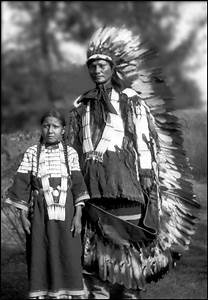
When visiting the native American tribe called Sioux (which is also the name of the language family) in western Dakota in the USA last fall, I learned about their customs and traditions and the way in which their lives nowadays in reservations differ from the lives of their ancestors, using participant observation. An example for this is the way in which the Lakota (a group within the Sioux tribe) used to be nomadic moving in tipis in order to facilitate hunting bisons. Although some practices are not part of their everyday lives anymore some others stayed for example the name giving traditions. What is so significant about their name giving is that their names change over the course of their lives. A name given as a child, which is often an attribute of the child (for example “running rabbit”), may change at adolescence with growing experience and new accomplishments. These names are given by their society and therefor earned.
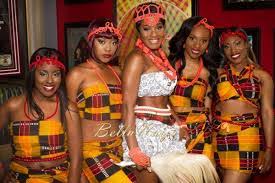
The Igbos, an ethnic group situated in south-eastern Nigeria, name their children according to situations surrounding the birth of the child or things they wish for their children as well as prayers. For instance, if a mother may have had many miscarriages before the birth of their first child they might call him or her Kamsiyochukwu (meaning ‘As I have asked God’) as a reflection of the mother’s prayers for finally having a child.
Growing up in England names did not play a very significant role, as I have experienced. Most parents give the names according to how it sounds (melodically).
Although the significance of the name and the process of name giving differs from region to region, they all have in common that names are somehow linked to their identity and are used to distinguish one from another but also influence the way in which one is perceived by others.
The influence of the names on the perception of other people though, differs with the origin of the name, as the case of the Chinese-American actress Chloe Bennet (formerly Chloe Wang) shows, who changed her surname from a common Chinese to a very typical U.S. American last name, justifying it by stating ‘Hollywood is racist’ in one of her tweets and having to pay her rent. This shows how her name not only influenced her economically but also went so far that it led her to change her identity on paper in order to combat this problem.
A study that supports the experiences of Chloe Bennet, is one conducted by Stanford University and the Paris School of Economics in France which revealed that out of nearly identical applications with different sounding names, the French sounding names received 70% more callbacks.
Nowadays, parents of children with non-western origin take away the burden of changing your name while growing up and being accused of denying their identity by giving them western sounding names either next to native names or as only first names. The same way in which the names were given by God/Allah/Jaweh to show Abraham what he is going to accomplish and what great things are going to come his way or the same way in which Igbo parents name their children what they wish for them, this new wave of western names among non-western people shows what their parents wish for them: to be able to get a good job. As one could see in the example of Chloe Bennet her name went ahead of her, giving the people who cast in Hollywood a rough idea of her profile. They might have thought of her to be boring, somehow ‘nerdy’ and maybe even ‘prude’, not exactly what Hollywood would want to cast as a main character in a new blockbuster, which most likely is the reason why she changed her last name – to detach herself from those stereotypes of east-Asian women. This same way the wave of giving non-western children western names is an attempt to give them a western-like profile. This almost desperate act of assimilation through name giving still reflects what parents wish for their children and the hope they see in them but in this case loses its aspect of cultural identity.
So, here one may themselves whether or whether not cultural identity has to be “traded” for a western-like profile in order to gain professional benefit and whether this western-like profile is considered to be a standard one has to reach in order to be truly successful. As usual I would like to hear your thoughts on this in the comment section below considering the anthropological terminology highlighted in the text which I find very important when exploring this topic.

 Anthropology for Dummies